A small room painted white can still feel small. Plenty of them do. Colour can make a room feel bigger, but not the way most people try — by picking the palest chip on the chart and hoping.
The short answer
A small room looks bigger when the eye cannot find its edges. Four things do that:
- Light, reflective colour on the walls, so the room bounces daylight around instead of absorbing it
- Soft or slightly cool colours, which seem to recede, rather than saturated warm ones, which seem to come towards you
- One colour across walls, ceiling and trim, so the corners and edges blur
- Or the opposite: one deep colour everywhere, so the corners disappear into shadow
What does not work is the middle: a mid-tone wall with bright white trim, which outlines every edge of the room like a diagram.
Light reflectance matters more than the colour name
Every paint has a light reflectance value, or LRV, on a scale from 0 for black to 100 for pure white. Most brands print it on the colour card or the product page. For a small room that does not get much daylight, look for an LRV of about 70 or above. Two colours both sold as "pale grey" can be fifteen points apart, and the lower one will make the room feel noticeably darker.
LRV is also why white is not automatically the answer. A brilliant white in a dim room goes flat and grey, because there is not enough light to make it look white. A warm white with a slightly lower LRV often looks brighter there, because it does not turn cold.
Paint the ceiling and the trim with the walls
The biggest single trick is not a colour. It is where you stop painting.
A white ceiling over coloured walls draws a line around the top of the room, and the eye reads that line as the height. Paint the ceiling the same colour as the walls, or a lighter tint of it, and the line disappears. Low ceilings benefit most.
The same goes for skirting boards, door frames and window frames. Bright white trim against a coloured wall outlines every edge. Trim in the wall colour, in a harder-wearing sheen, makes the room read as one continuous surface. Designers call this colour drenching, and it is the most reliable way to make a small room look both larger and more deliberate.
Light direction decides the undertone
Every neutral leans warm or cool, and the light in the room pushes it further in the same direction.
- In a north-facing room, the light is cool and indirect all day. Cool greys and blues go cold and shadowy there, so choose a warm white, soft stone or a pale butter yellow.
- In a south-facing room, warm light washes colour out. A pale blue, a soft green or a cleaner white stays fresh instead of turning yellow.
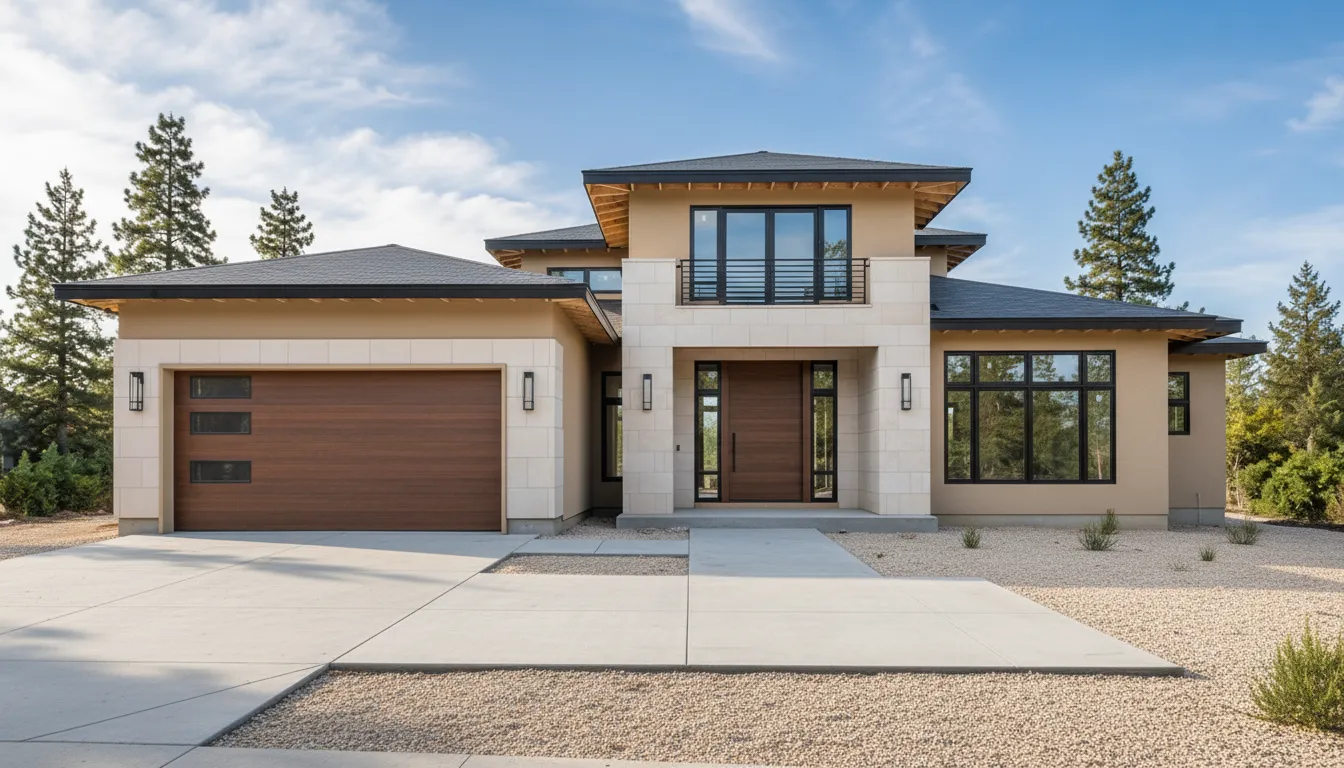
Light does the same thing to a room that it does to a facade, and the rules transfer almost one to one.
Five colours that work in small rooms
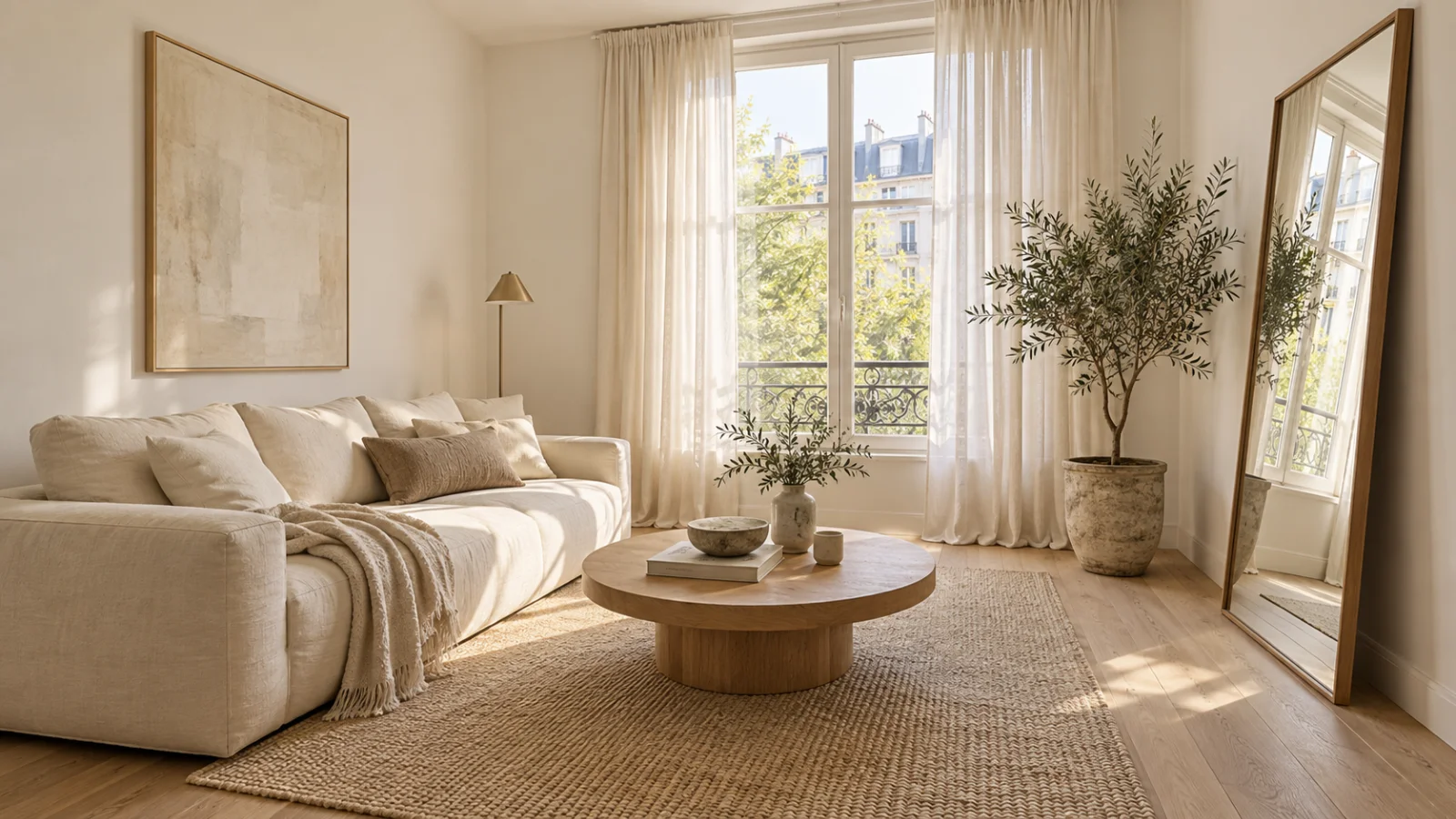
Chalk white. A soft, slightly warm white on the walls and the ceiling. It bounces light into every corner and blurs the line where the walls meet the ceiling. The safest choice for a dim room.
Pale sky blue. Cool tones recede, so the walls seem further away. Best in a room with good daylight. With white trim it reads crisp; with matching trim it reads airy.
Soft stone. A light, warm beige-grey. Light enough to open the room, warm enough never to feel cold, and at its best drenched across the walls, ceiling and woodwork.
Butter yellow. A pale, soft yellow fakes sunshine in a room that does not get any. Keep it muted: a saturated yellow advances and shrinks the room.
Charcoal — yes, really. In a tiny room, a deep colour on every surface sends the corners into shadow, and the room stops having edges. It works in studies, cloakrooms and small TV rooms. The room will not feel airy, but it will stop feeling cramped.
What makes a small room feel smaller
- Bright white skirting and frames on a mid-tone wall
- A stark white ceiling over coloured walls
- Saturated warm colours — terracotta, bright yellow, red — on all four walls
- A different colour on every wall
- Dark walls and a dark floor under a white ceiling, which turns the room into a box
Before you paint
Small rooms magnify mistakes, because you see every wall at once. Photograph the room from the doorway at the time of day you use it most, and try two or three candidates on the photo, walls and ceiling together. Then paint a large sample on the wall that gets the least light. If the colour works there, it works everywhere in the room.
Stop imagining it. Look at it.
One photo of your house, and Exterior Snap AI shows you the finished result in about ten seconds.