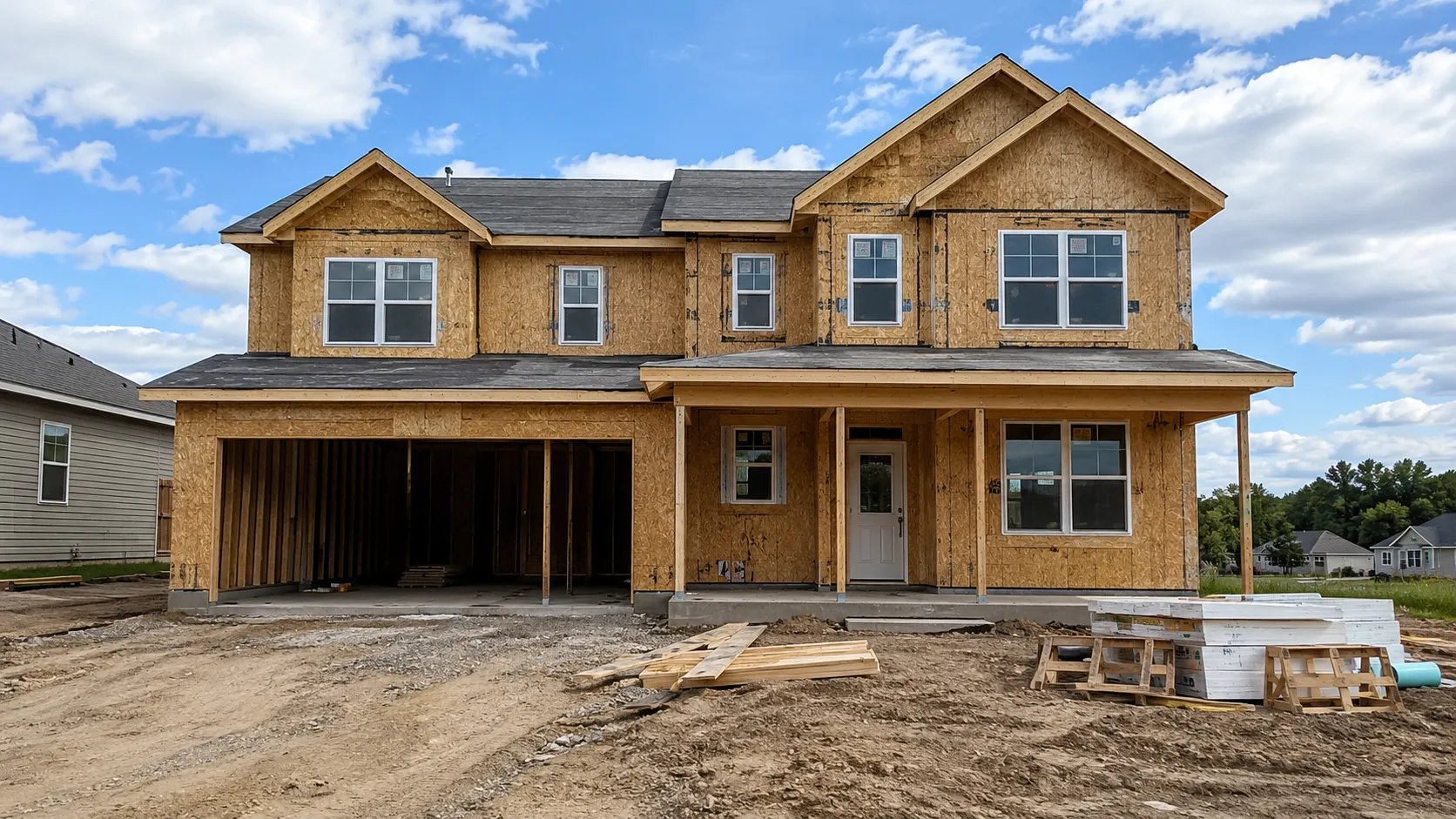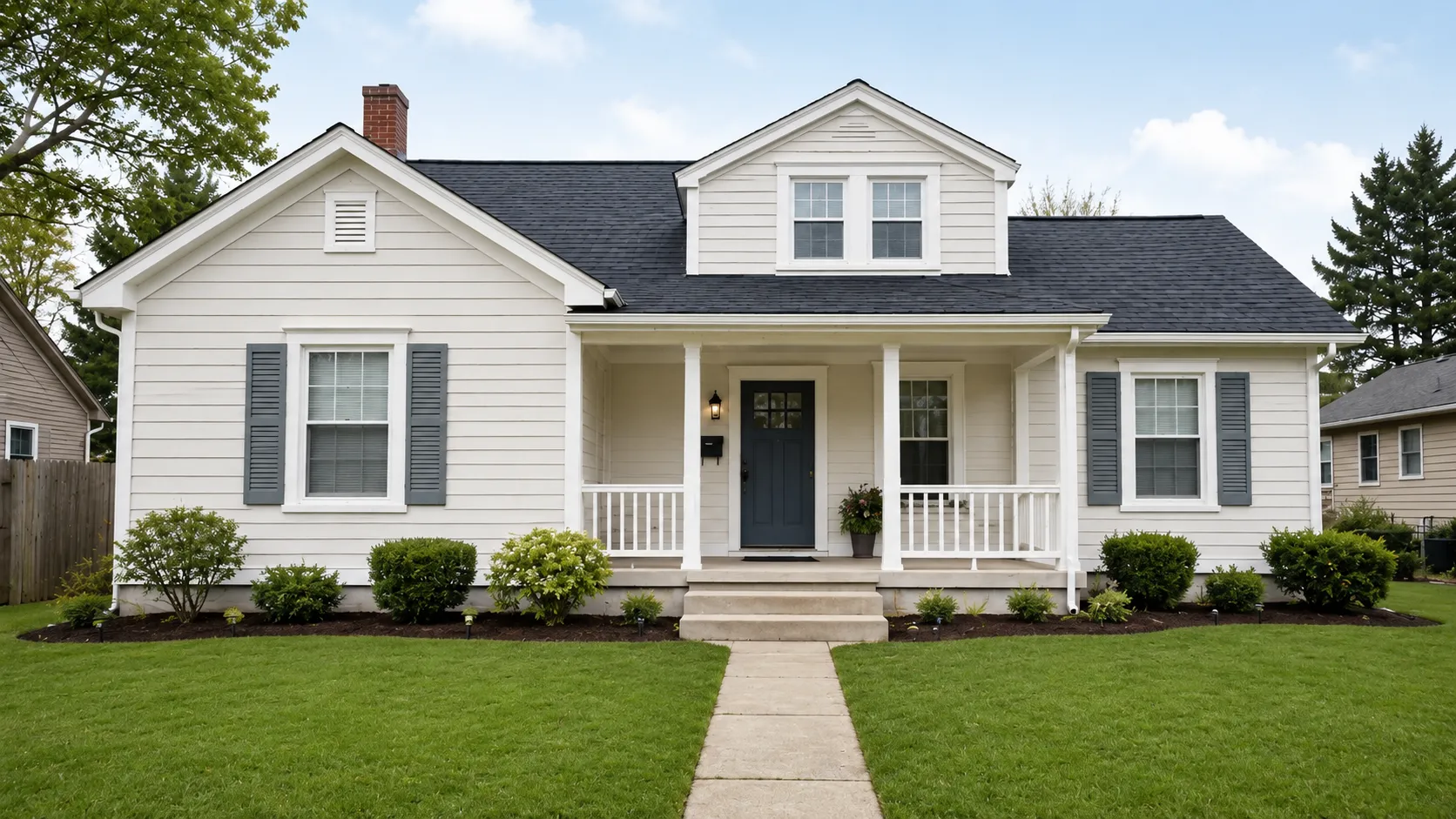
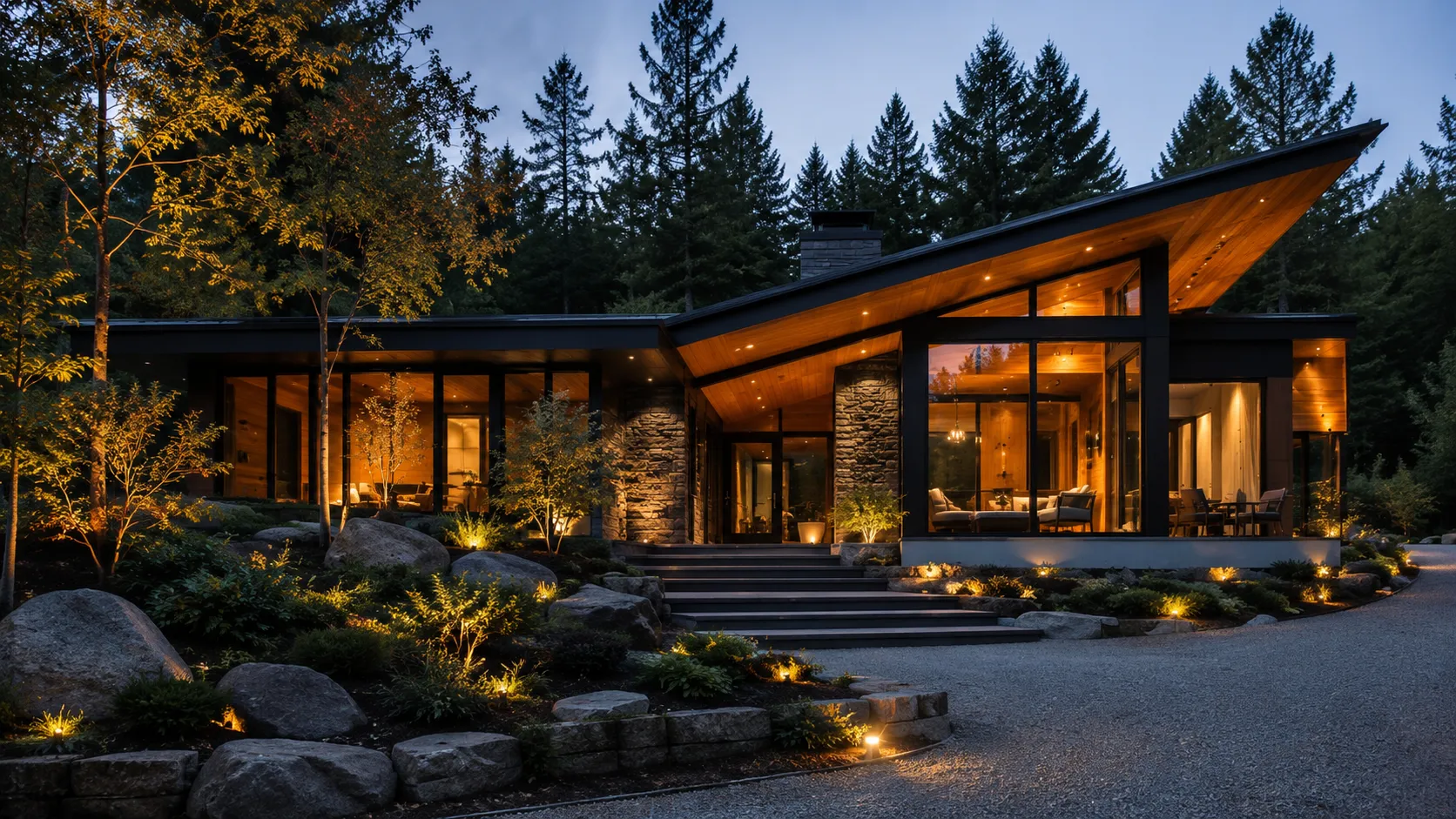
Two houses on the same street, the same paint, bought the same week. One looks like the photograph on the tin. The other looks grey, flat and faintly damp.
Nothing was done wrong. They face different directions.
The short version
Light direction changes what a colour does more than one shade of difference on the colour card does. In the northern hemisphere:
North-facing walls get no direct sun. The light is indirect, cool and consistent all day. Colours go cooler, darker and greyer than the sample. Anything with a grey or blue base drifts towards cold.
South-facing walls get strong direct sun for most of the day. Colours go lighter, warmer and less saturated. Pale colours can bleach out to near-white at midday.
East-facing walls are warm in the morning, neutral-to-cool from lunchtime onwards. You see them warm when you leave and cool when you come home.
West-facing walls are flat and cool for most of the day, then take a strong warm wash in the late afternoon — the condition most people photograph and then feel misled by.
If you take one thing: a colour chosen for a south wall will usually disappoint on a north wall, and the correction is in temperature, not in brightness.
The compensation rule
The instinct on a dark north-facing facade is to go lighter. That is the wrong lever. Lighter grey on a north wall is still cold — it just becomes a lighter cold.
On north-facing walls, go warmer, not lighter. Pick colours with a yellow, red or green base rather than a blue or pure-grey one. Warm white instead of brilliant white. Greige instead of grey. Warm sage instead of cool eucalyptus. The wall will cool the colour down for you; start warm enough that it lands in neutral.
On south-facing walls, go deeper and slightly cooler. Full sun washes out saturation, so a colour that looks right on the card will look weaker on the wall. Take it one or two steps deeper than feels comfortable indoors. This is the one orientation where a colour you think is slightly too strong usually turns out to be correct.
On east and west walls, the trap is judging at the wrong hour. Decide on a west wall at two in the afternoon, not at six.
Why samples lie about this specifically
A paint sample has three advantages your wall will never have: it is small, it is held at whatever angle gets the best light, and it is usually looked at within arm's reach.
Why exterior paint colours never look like the swatch covers scale and distance. Orientation is the other half of the same problem, and it is the half people skip, because it requires standing outside at inconvenient times.
There is also a physical effect worth knowing: a wall in indirect light picks up colour from whatever is in front of it. A north wall facing a lawn goes faintly green. One facing a red-brick neighbour picks up warmth from it. One under a large tree goes both green and much darker than the sample suggests.
Most houses have more than one orientation
This is the part that is genuinely hard, and where a single-colour-for-everything decision quietly fails.
A detached house has four elevations in four different lights, all painted the same colour, all looking slightly different. That is normal and nobody minds — people see one or two elevations at a time.
It becomes a real problem when the front of the house turns a corner. If your main elevation faces north and the return wall faces west, they will not match in the late afternoon, and the join is visible from the pavement. The usual fix is not two colours. It is choosing a colour with enough warmth to survive the north side, and accepting that it looks slightly warmer on the west one.
How to actually check before you buy
Physical sampling the honest way takes a week: paint A4 boards, fix one to each elevation you care about, and look at them at morning, midday and early evening.
Most people do not do this, which is why so many facades are a colour that was chosen in a car park.
The faster version is to photograph the house as it actually sits — same time of day you most often see it, both the front and the elevation that turns the corner — and try the shortlist on those photographs. It will not model the light physics, but it does something the colour card cannot: it shows the colour at the right size, against your roof, your windows and your neighbour's brick. That is where most of the error lives anyway.
Stop imagining it. Look at it.
One photo of your house, and Exterior Snap AI shows you the finished result in about ten seconds.