White trim or black? It is the first question nearly everyone asks once they have decided on charcoal, and it changes the house more than the exact shade of charcoal does.
The short answer: white trim makes a charcoal house crisp and traditional. Black trim makes it modern and graphic, but heavier. Trim in the same charcoal as the walls makes it look the most expensive of the three, as long as one warm thing — usually a timber front door — breaks it up.
Same house, three trims
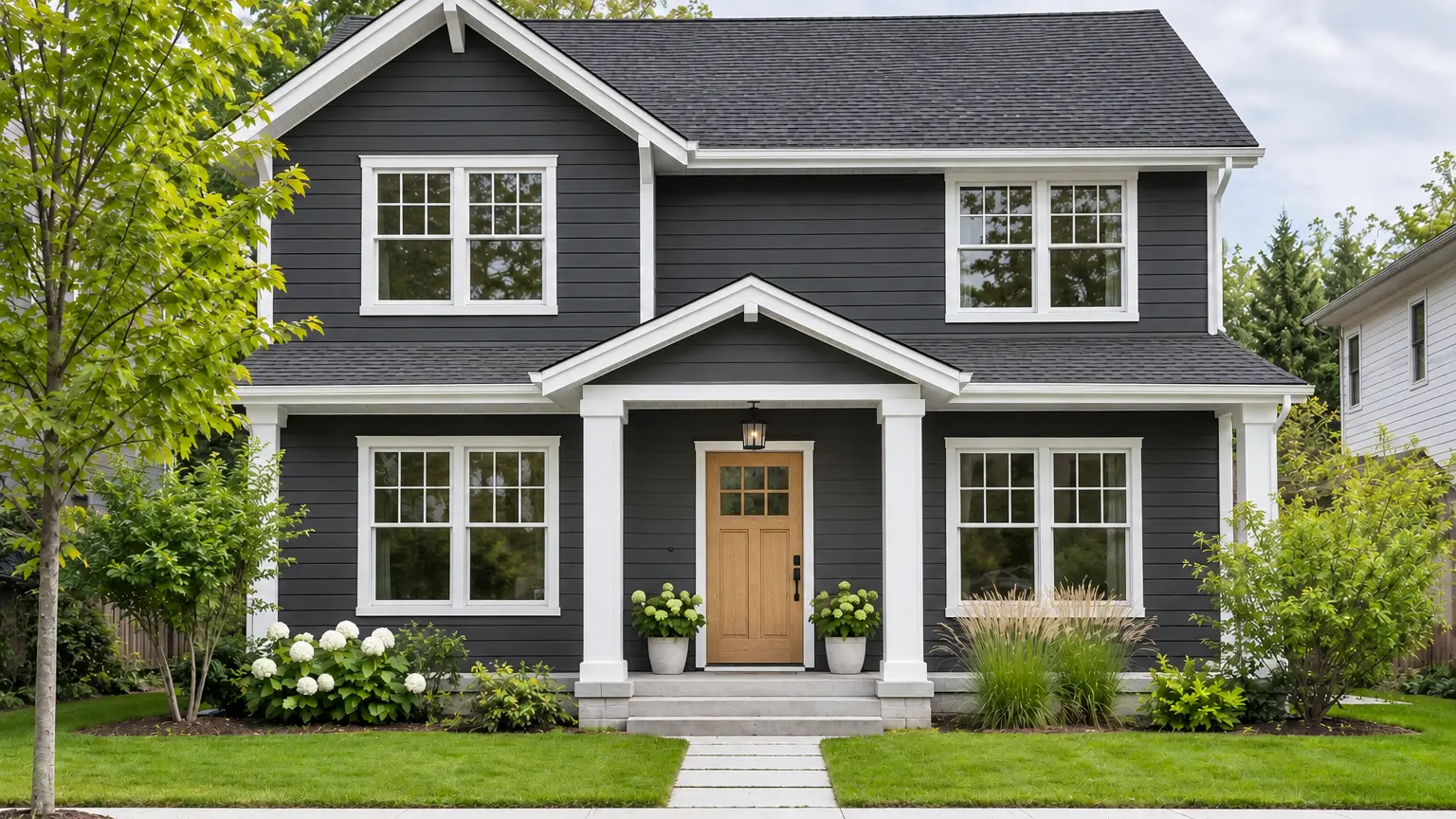
White trim, white window frames and white porch posts.
White trim outlines every window, corner and gable, so the house reads as a drawing in white on dark. That is the appeal, and the risk: it shows off good proportions and exposes awkward ones. Choose a white with a touch of grey in it rather than brilliant white, which can look stark against something this dark. Try Farrow & Ball Strong White (No. 2001) or Sherwin-Williams Pure White (SW 7005).
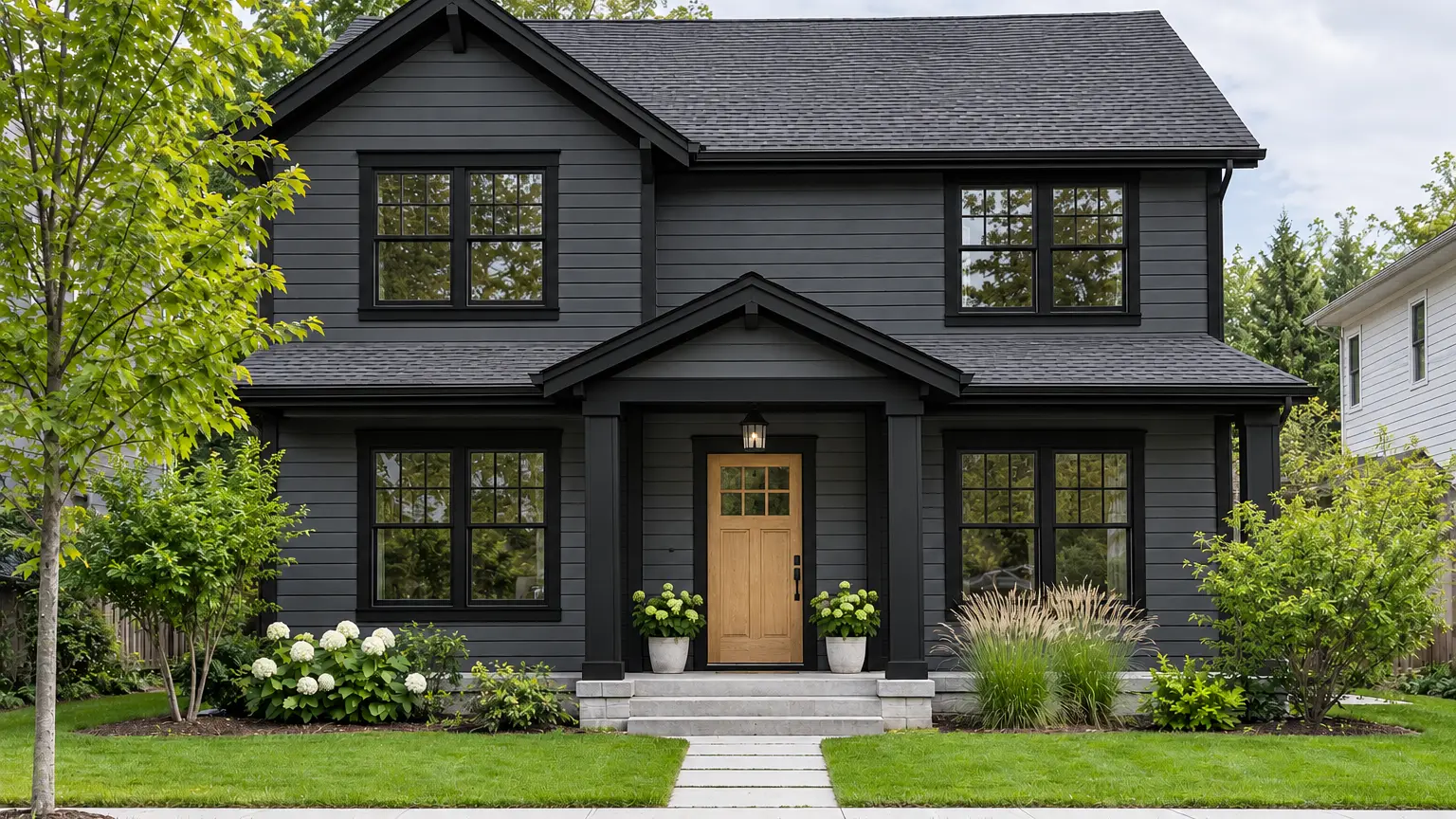
The same house with the trim, frames and porch posts in black.
Black trim turns the windows into dark openings and the house into something more modern. It only works if the siding stays a true charcoal and does not drift towards black itself, or the two merge and the house looks heavy and flat.
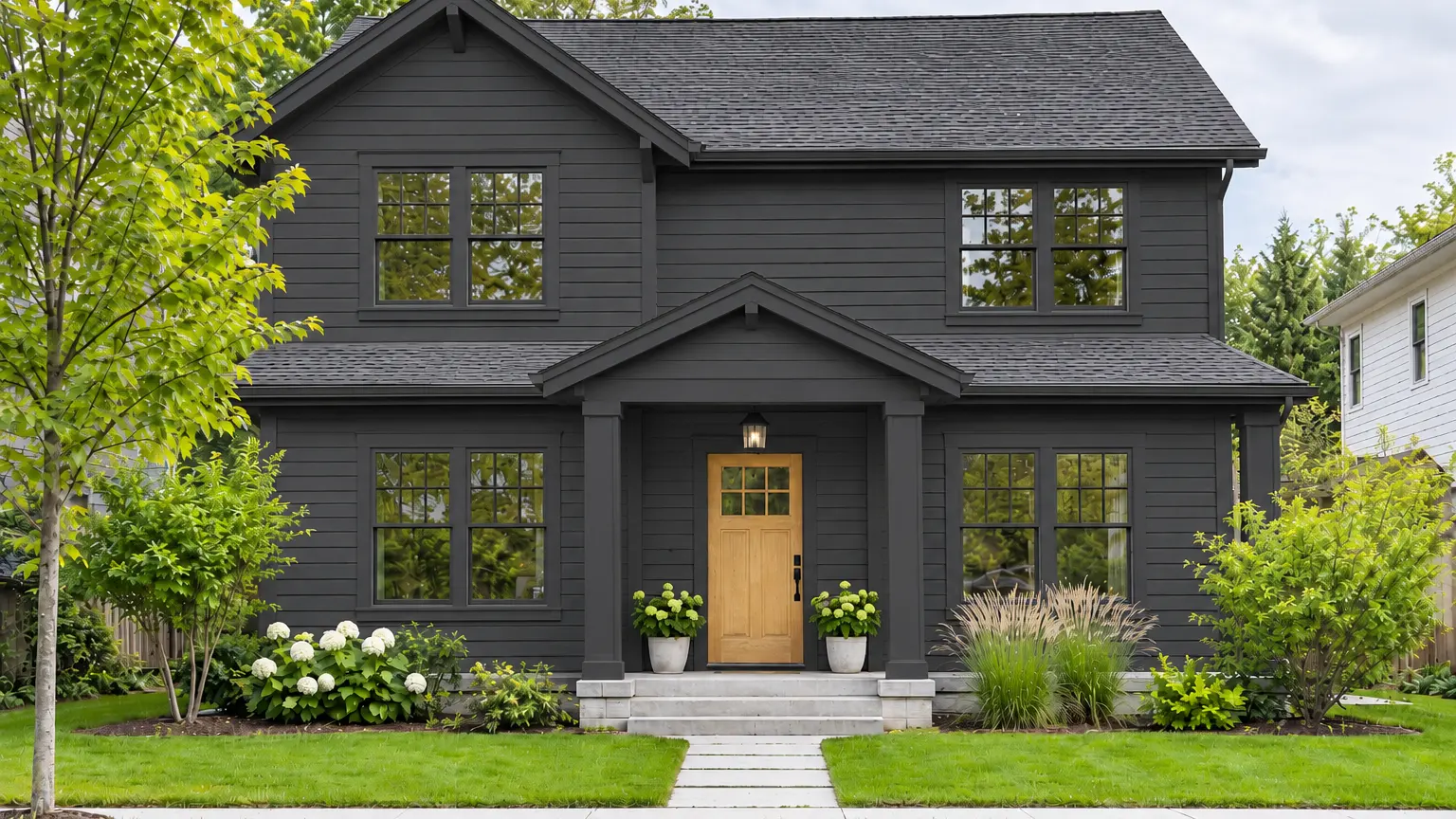
Charcoal trim — the same colour as the walls, as in the photo at the top of this page — makes the house read as one object. The shape and the texture of the siding do the work, and nothing outlines anything. This is the version that looks least like a paint job and most like a material, and it needs one warm accent to keep it from looking severe.
For the siding itself, sample a softer charcoal and a deeper one side by side: Benjamin Moore Kendall Charcoal (HC-166) or Farrow & Ball Down Pipe (No. 26) on the softer side, Sherwin-Williams Iron Ore (SW 7069) on the deeper side.
Windows
Black frames are the default on new charcoal houses, and with charcoal or black trim they disappear into the facade. With white trim, black frames add a third line, which can look fussy on a small house.
White uPVC frames are the harder case, because on a charcoal wall they become the strongest line on the house. If you are not replacing them, white trim is the honest answer: repeating the white makes the frames look intentional instead of left over.
The front door
Against a dark wall, a door has to be warmer or lighter rather than louder. The general logic is in how to choose a front door colour. On charcoal specifically:
- Natural oak or other timber is the most reliable choice: warm against cool, and it gives a tone-on-tone house its one accent.
- Ochre or mustard is the bold version and works better than it sounds. Try Farrow & Ball India Yellow (No. 66).
- Deep green is subtle, and suits a softer charcoal better than a deep one.
- Black works only with white trim. Against charcoal trim it just disappears.
Roof, stone and brick
A charcoal or black roof over charcoal walls turns the house into one dark mass, which suits the tone-on-tone look. A warm brown roof is the difficult one: cool charcoal under a warm roof reads as a mismatch even to people who cannot say why, the same problem described in why the roof decides your facade.
A warm stone or brick base helps. It adds the warmth that charcoal lacks, so with stone or brick in the picture the trim can go a step cooler.
Heat and fade
Dark colours absorb more heat and fade faster, and both effects are strongest on a wall that gets the afternoon sun. If the front of the house faces south or west, expect the charcoal to soften over the years — which way the house faces matters more for dark colours than for any other.
On vinyl siding, check that the colour is approved for vinyl before you paint. Dark paint can make vinyl warp in strong sun unless it is made for it.
Choose the trim on a photo
Most people choose the charcoal from a sample and then argue about the trim on site. Do it the other way round: take one straight-on photo of the front from across the street, and try all three trims on it before anyone opens a tin. The version where you notice the house rather than the window frames is the one to paint.
Stop imagining it. Look at it.
One photo of your house, and Exterior Snap AI shows you the finished result in about ten seconds.