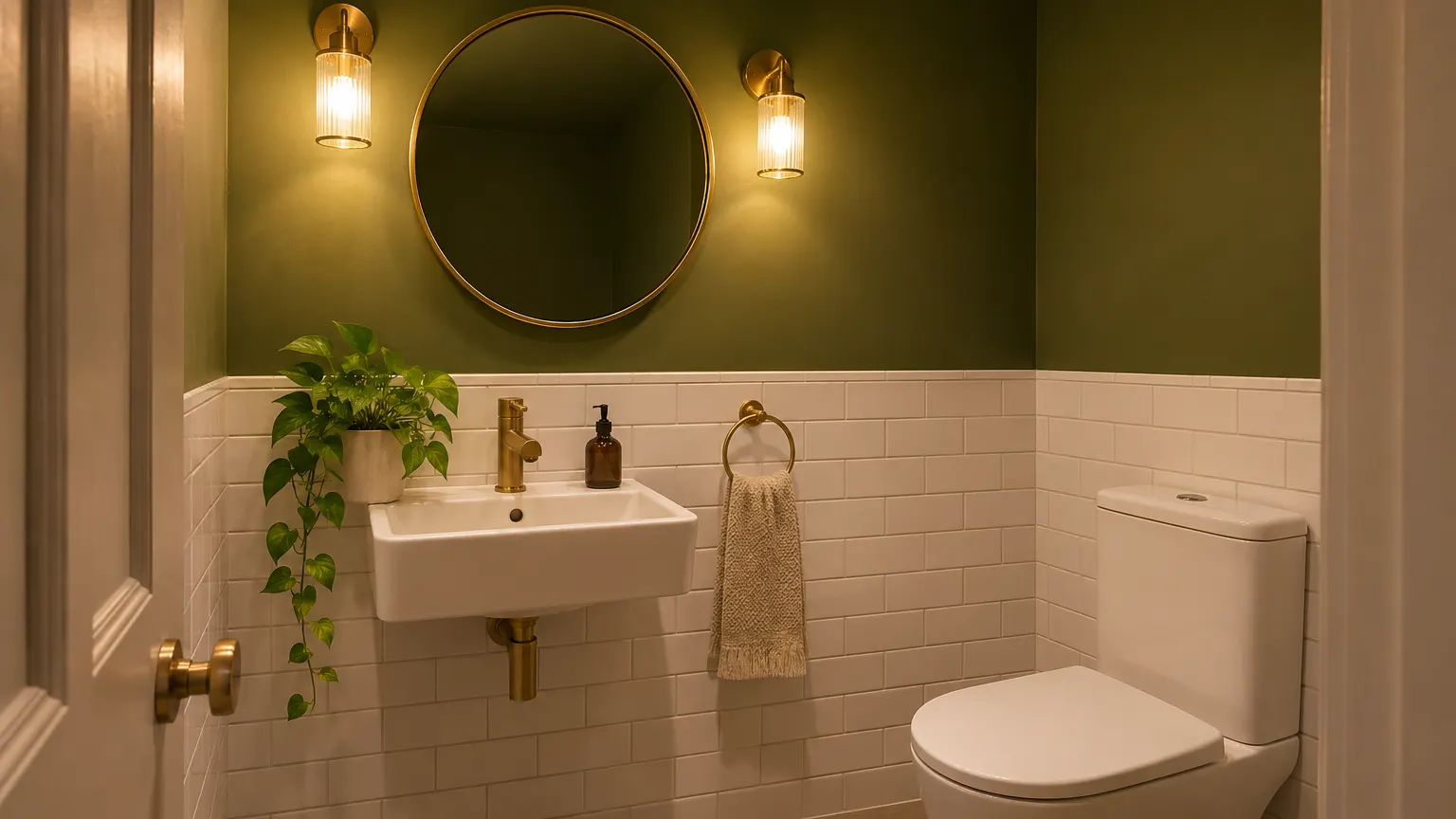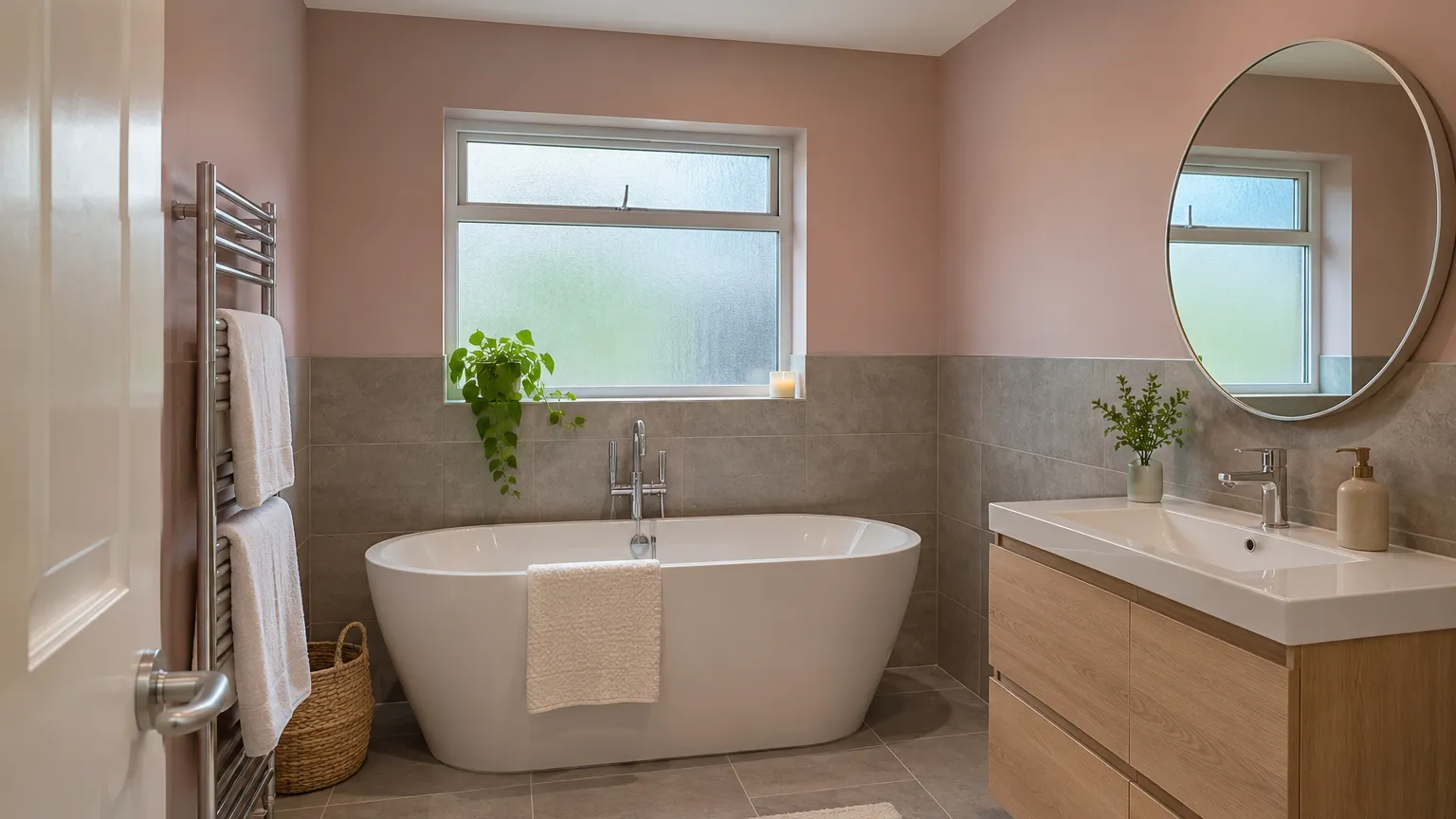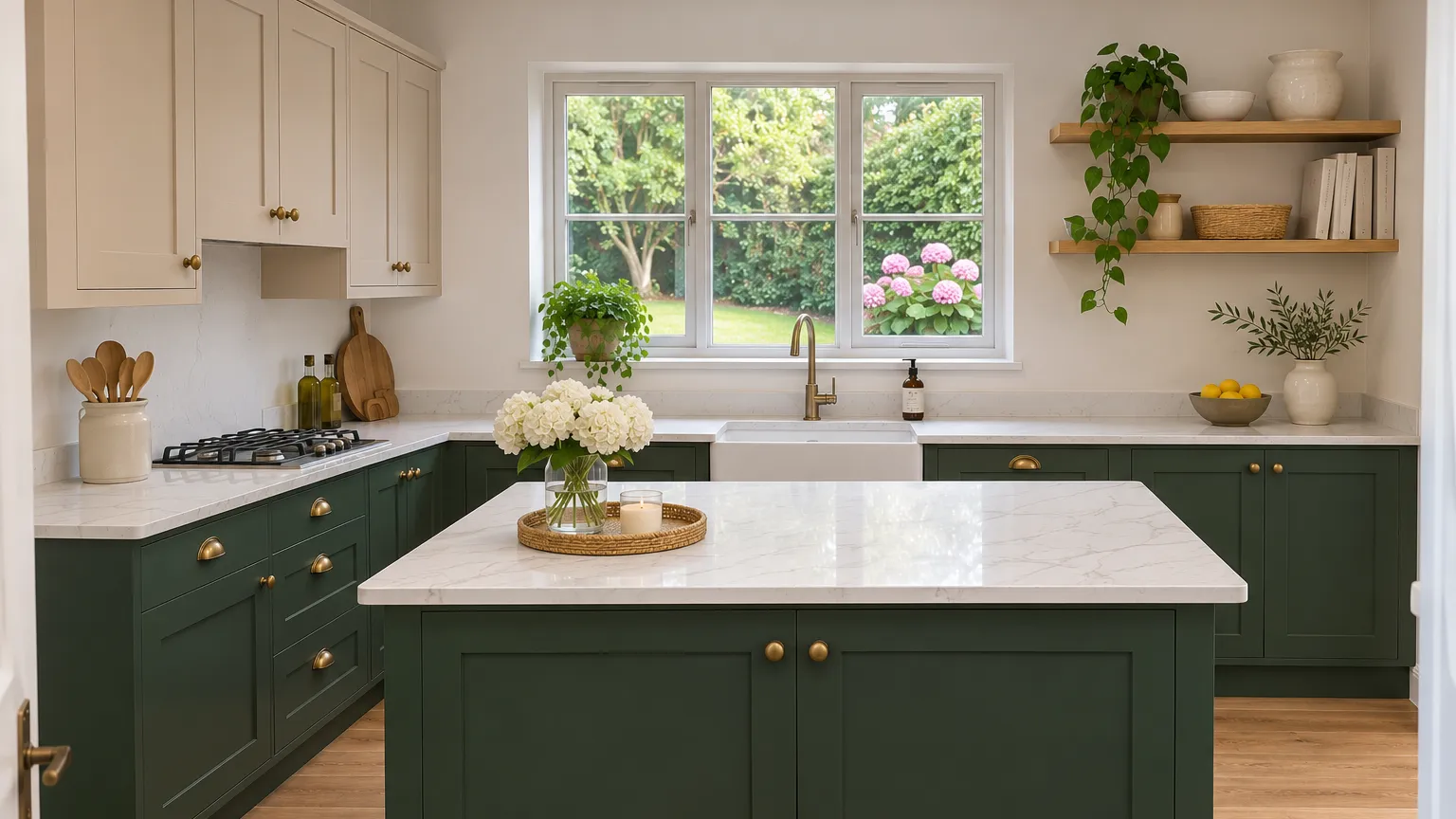
A bedroom is the one room you mostly use with the lights off or low. That makes it the best room in the house for a dark colour, and the worst for a dark colour done badly.
Six colours do moody well in a bedroom: deep teal, inky blue, forest green, aubergine, chocolate brown and, for anyone who wants the mood without the dark, dusty blue. The photos below show one bedroom in each colour, with the same lamps and the same bedding, so the only thing that changes is the colour.
Deep teal
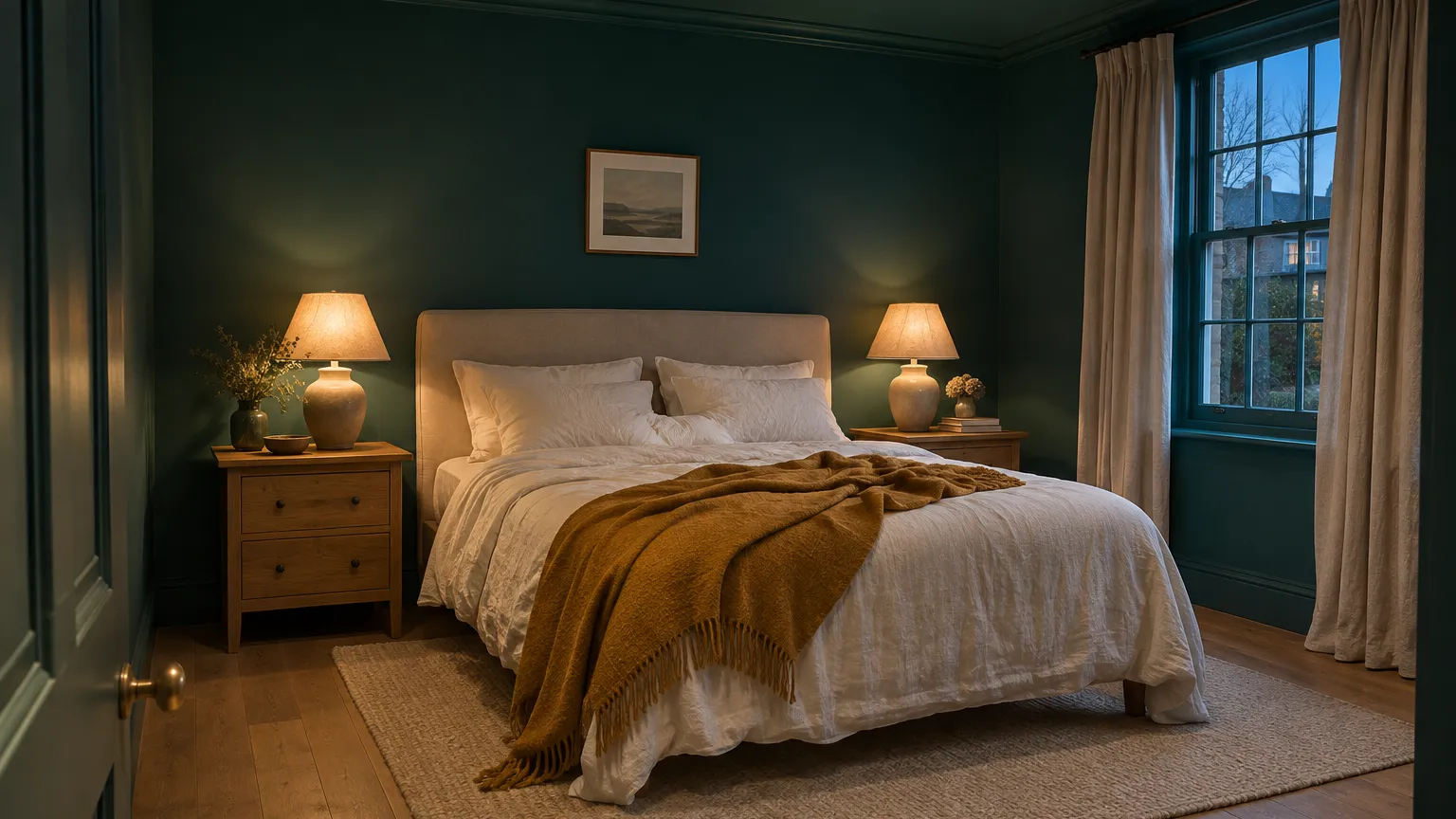
The photo at the top of this page. Blue enough to calm, green enough to stay warm under lamplight, and the dark colour that looks most like a choice rather than a default.
Sleeps well with: white or oatmeal linen, ochre and rust, brass.
Try: Farrow & Ball Vardo (No. 288) or Sherwin-Williams Dark Night (SW 6237).
Dusty blue
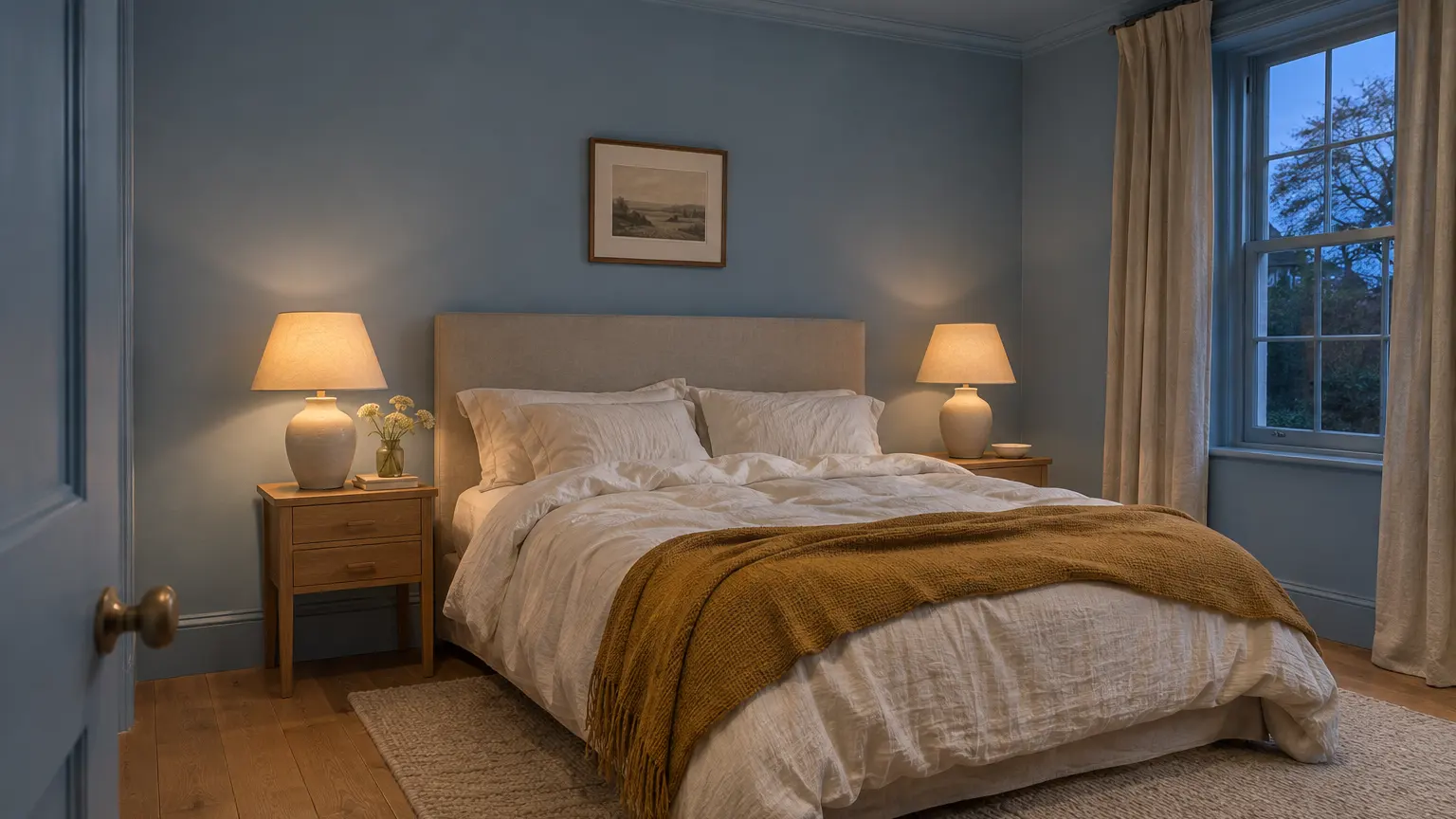
The soft option. A blue with enough grey in it to read as a neutral by day and go quietly deeper at night. It suits a bedroom that also has to feel bright in the morning, or one that doubles as an office.
Sleeps well with: white bedding, pale oak, a touch of terracotta.
Try: Farrow & Ball Oval Room Blue (No. 85) or Benjamin Moore Boothbay Gray (HC-165).
Inky blue
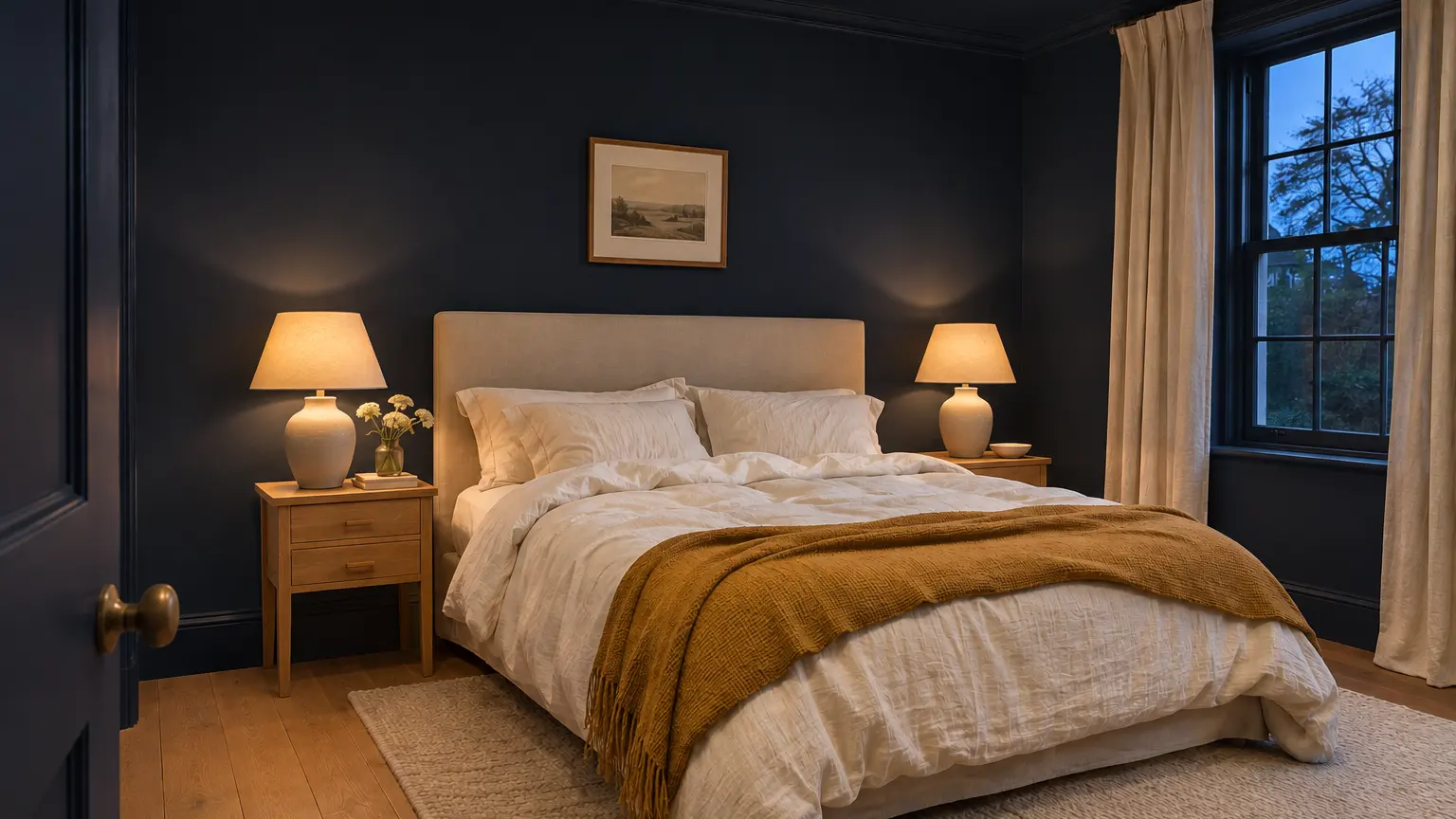
Navy taken nearly to black. After dark it reads almost black; in the morning it is unmistakably blue. Deep navy is one of the colours that makes any room look more expensive, and in a bedroom it also makes white linen look crisper than it is.
Sleeps well with: white linen, grey wool, walnut, brass.
Try: Farrow & Ball Drawing Room Blue (No. 253) or Sherwin-Williams Naval (SW 6244).
Forest green
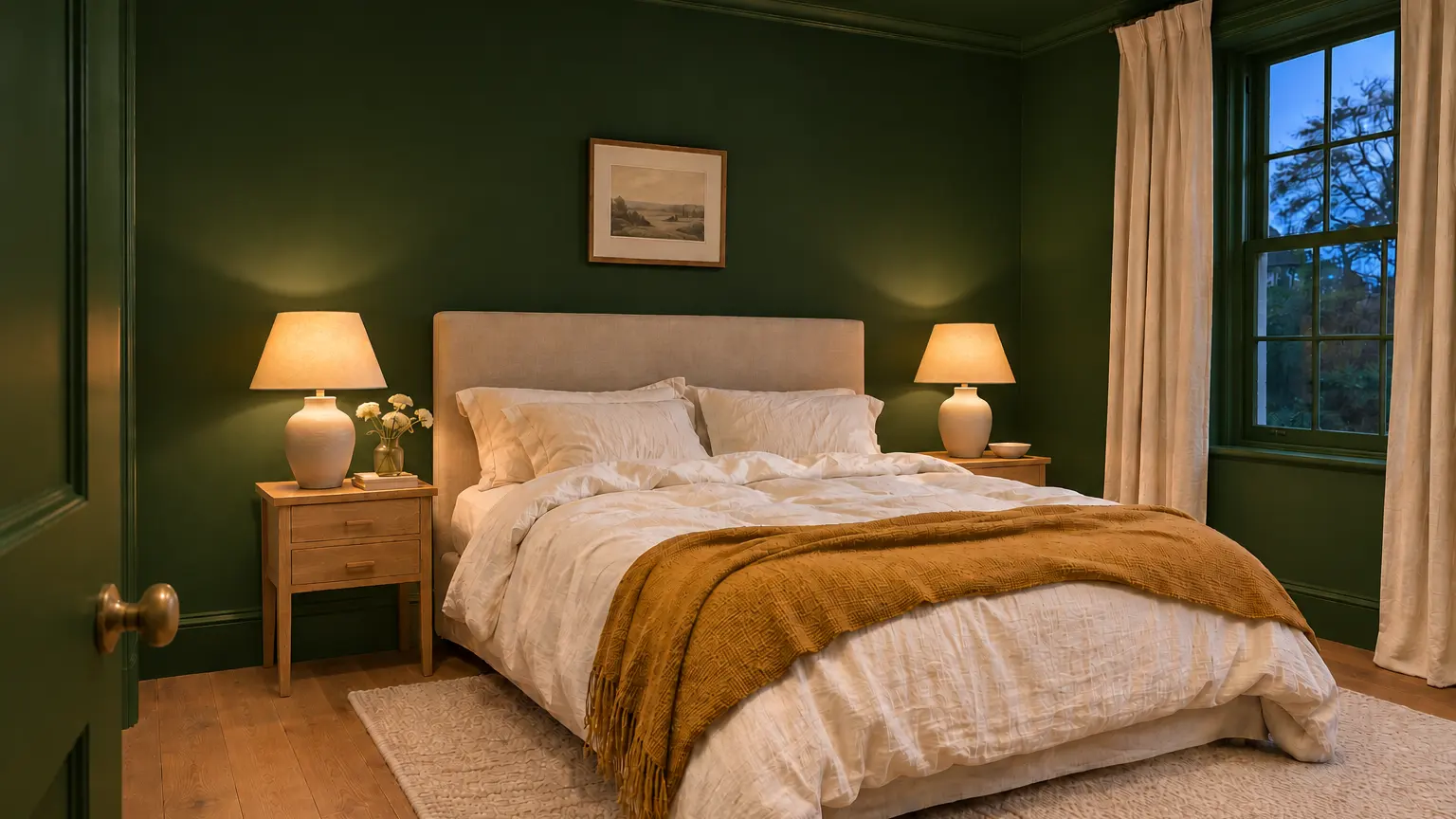
The most forgiving of the dark colours. It gets on with wood, linen and plants, and it never feels cold, even on a grey winter afternoon.
Sleeps well with: oak, natural linen, rust and mustard.
Try: Farrow & Ball Calke Green (No. 34) or Benjamin Moore Essex Green (HC-188).
Aubergine
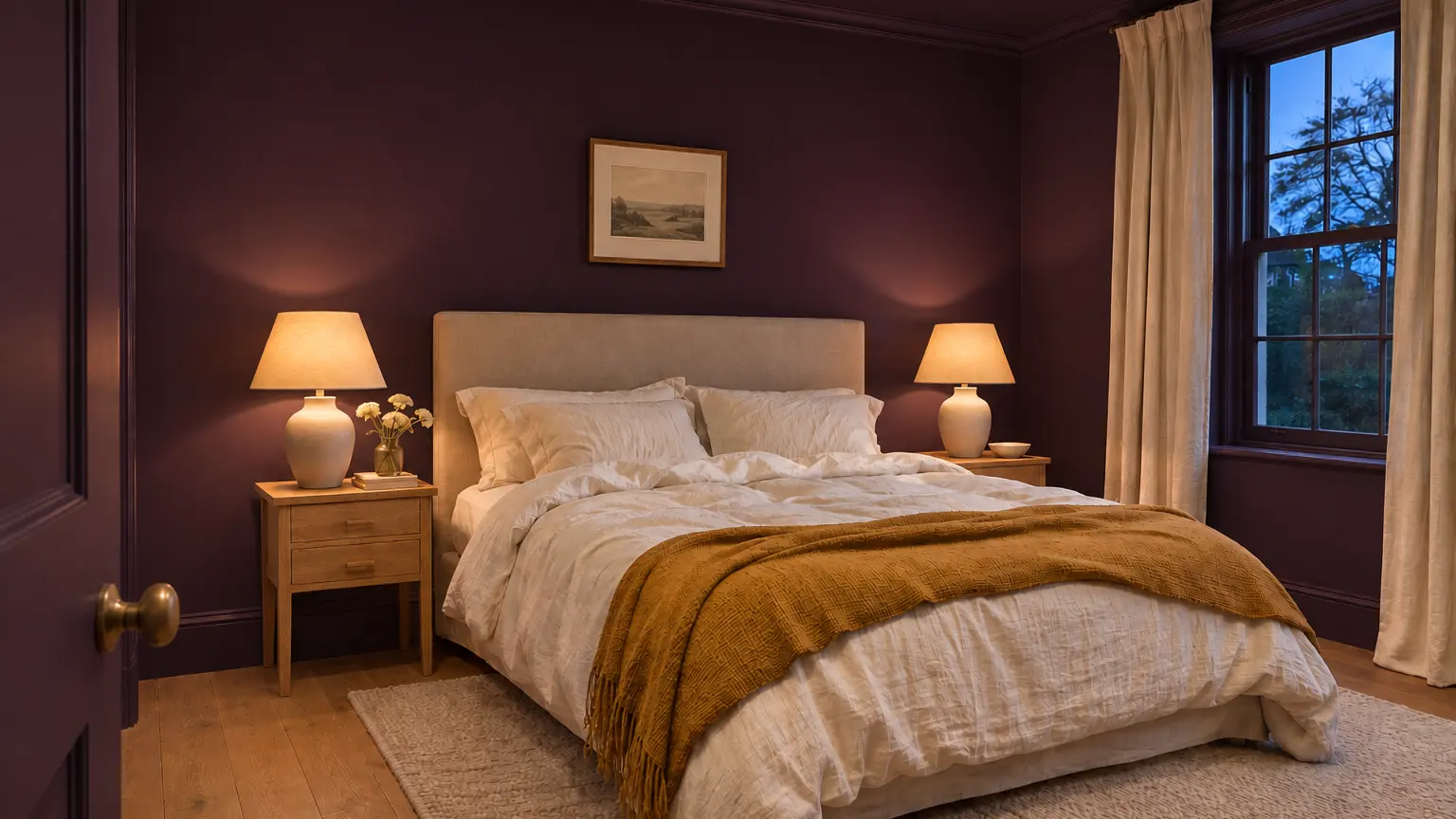
The boldest of the six. A deep purple-brown that reads as a dark neutral under warm lamps and as a real colour in daylight. Best in a room you only use at night.
Sleeps well with: blush and plaster pink, aged brass, dark wood.
Try: Farrow & Ball Brinjal (No. 222).
Chocolate brown
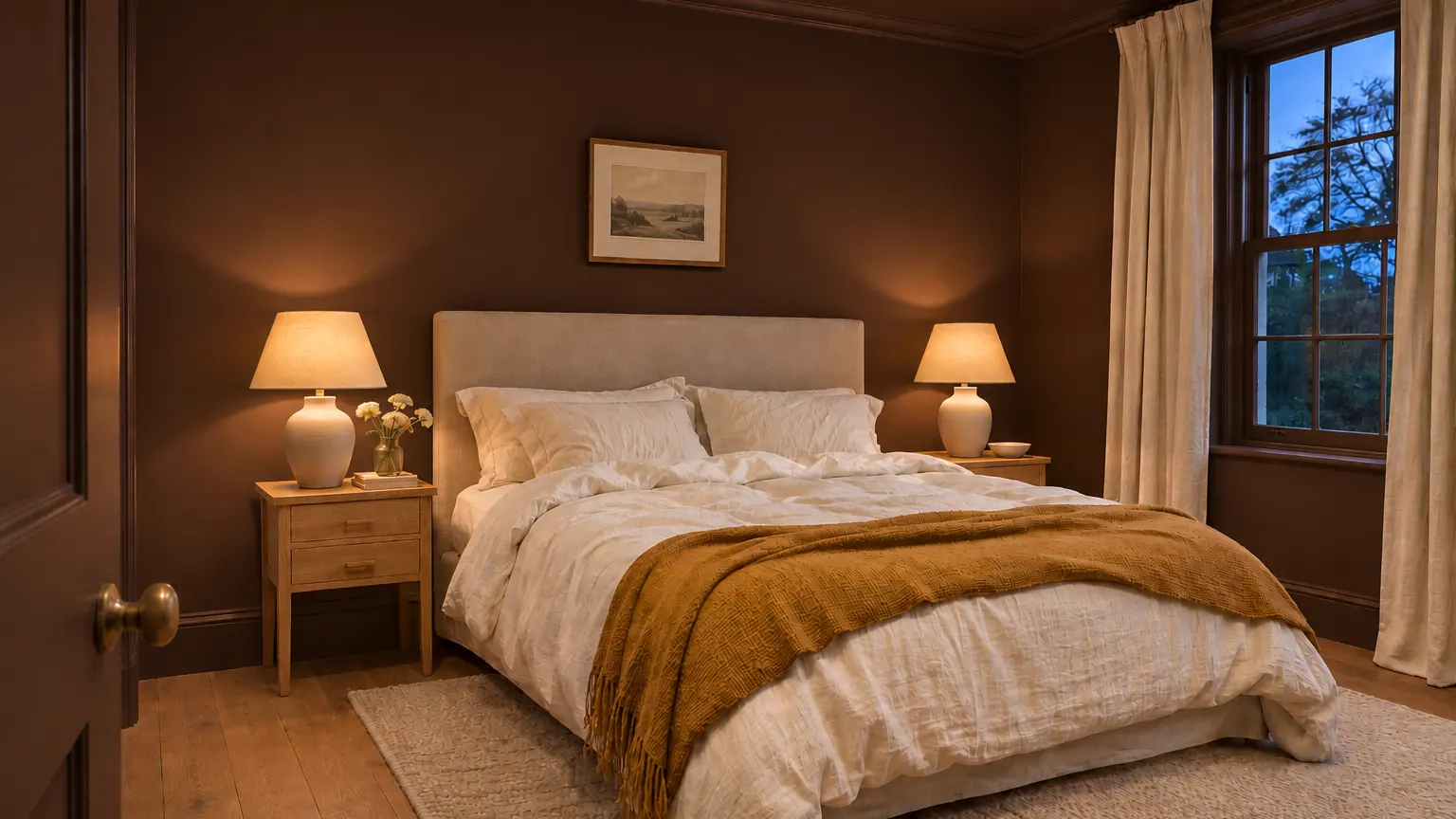
Warm and enveloping. In a bedroom that faces north it is the safest dark colour, because it has no blue in it for the cool light to pull out — the same reason warm darks win in a north-facing room.
Sleeps well with: cream, caramel leather, linen in sand and white.
Try: Farrow & Ball Salon Drab (No. 290) or Sherwin-Williams Urbane Bronze (SW 7048).
Make dark work in a bedroom
Paint the ceiling too. From the pillow, a white ceiling over dark walls is the top edge of a box, and you look at it every night. Take the colour up, or use a lighter tint of it — the same line that makes a small room feel smaller makes a dark one feel boxed in.
Choose a matt that wipes. Dark colours show scuffs and fingermarks more than pale ones, especially where the bed meets the wall. A washable matt keeps the soft look without the marks.
Warm bulbs, low down. Bedside lamps rather than a central downlight, with warm white bulbs. A cool LED turns teal grey and aubergine muddy.
Keep the bedding light. Dark walls make white or oatmeal linen glow. Dark bedding against dark walls flattens the room unless the textures are very different.
Choose it from the pillow
Most bedroom colours are chosen standing in the doorway at midday. You will mostly see the room lying down, in the evening, with the lamps on.
So take the photo from the bed, with the lamps on, and try the colours on that. The one you would still like to wake up to is the right one.
Stop imagining it. Look at it.
One photo of your house, and Exterior Snap AI shows you the finished result in about ten seconds.